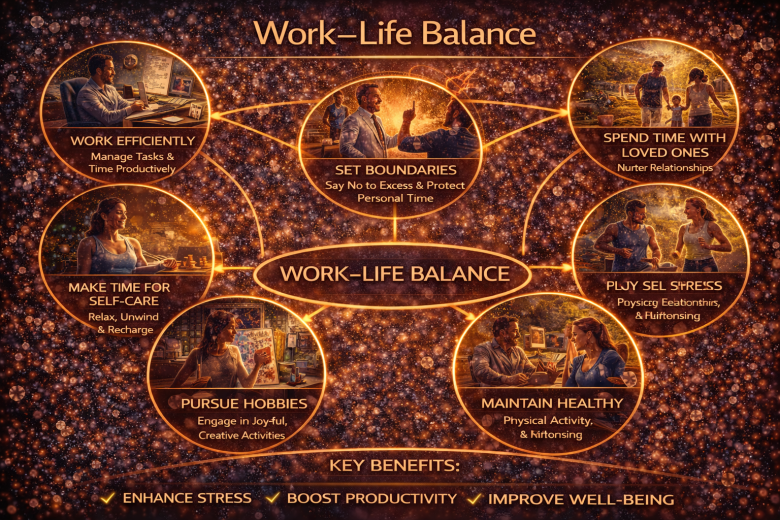
In modern life, work can easily expand to fill every available hour. Smartphones, remote work tools, and constant connectivity often blur the line between professional responsibilities and personal time. Maintaining a healthy balance between work and personal life is essential for long-term wellbeing, productivity, and overall life satisfaction.
Work–life balance does not mean dividing time perfectly between job tasks and personal activities. Instead, it means creating a sustainable rhythm where work responsibilities are fulfilled while still leaving space for rest, relationships, and personal interests. When people feel that their time is balanced, they are more likely to remain motivated, focused, and emotionally stable.
One important step toward balance is learning to set clear boundaries. Many professionals feel pressure to respond to emails or messages at any hour, but constant availability can lead to fatigue and reduced concentration. Establishing designated work hours and allowing personal time without interruptions helps protect mental energy and prevents burnout over time.
Planning daily priorities can also make a significant difference. Instead of trying to complete many tasks simultaneously, focusing on the most important responsibilities first often leads to better results with less stress. Structured planning methods, such as creating task lists or setting realistic deadlines, help individuals maintain control over their workload.
Another key aspect of work–life balance is making time for activities outside of work. Exercise, hobbies, family time, and relaxation all contribute to a healthier lifestyle. These activities allow the brain to recover from demanding tasks and can improve creativity and decision-making once work resumes.
Employers also play an important role in promoting balance. Flexible schedules, reasonable workloads, and supportive workplace cultures help employees maintain both productivity and wellbeing. Organizations that encourage healthy work habits often benefit from increased employee satisfaction and long-term engagement.
Finding a sustainable rhythm between work and personal life is an ongoing process rather than a fixed goal. As careers, responsibilities, and personal priorities evolve, adjusting routines and expectations helps maintain a healthy balance that supports both professional success and personal wellbeing.